
Equipment · Muninmax
Canning Accessories
Supporting equipment connects can preparation, retort handling and finished-package handling. The following duties are described in MNM’s coconut and pineapple reference lines; the arrangement follows the selected process.
Discuss Your Equipment Requirements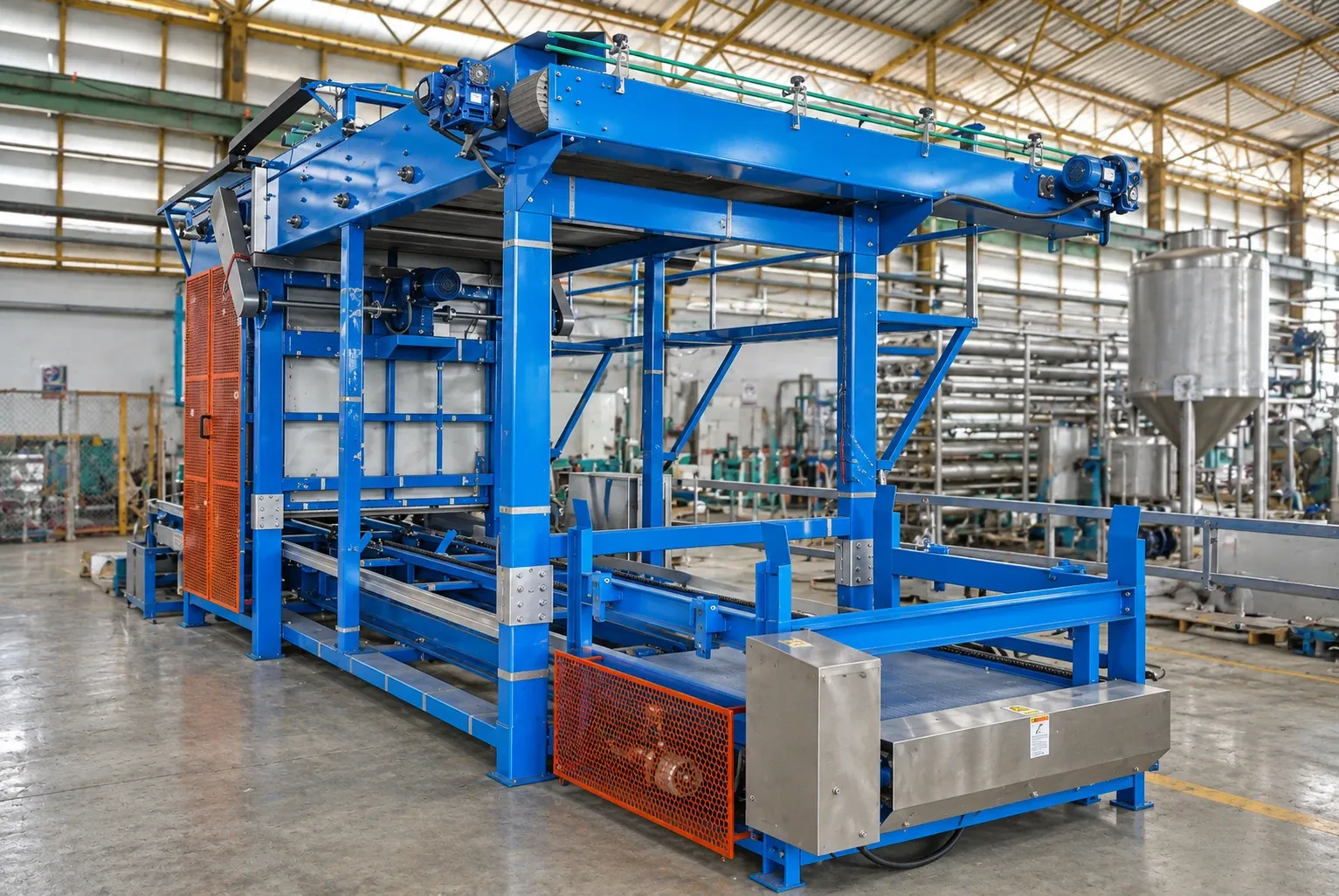
Empty-Can Preparation
Can Depalletizing
In the coconut milk and cream route, depalletizing brings empty cans from pallets into the preparation section before washing, loading and rotary filling.
Empty-Can Washing and Loading
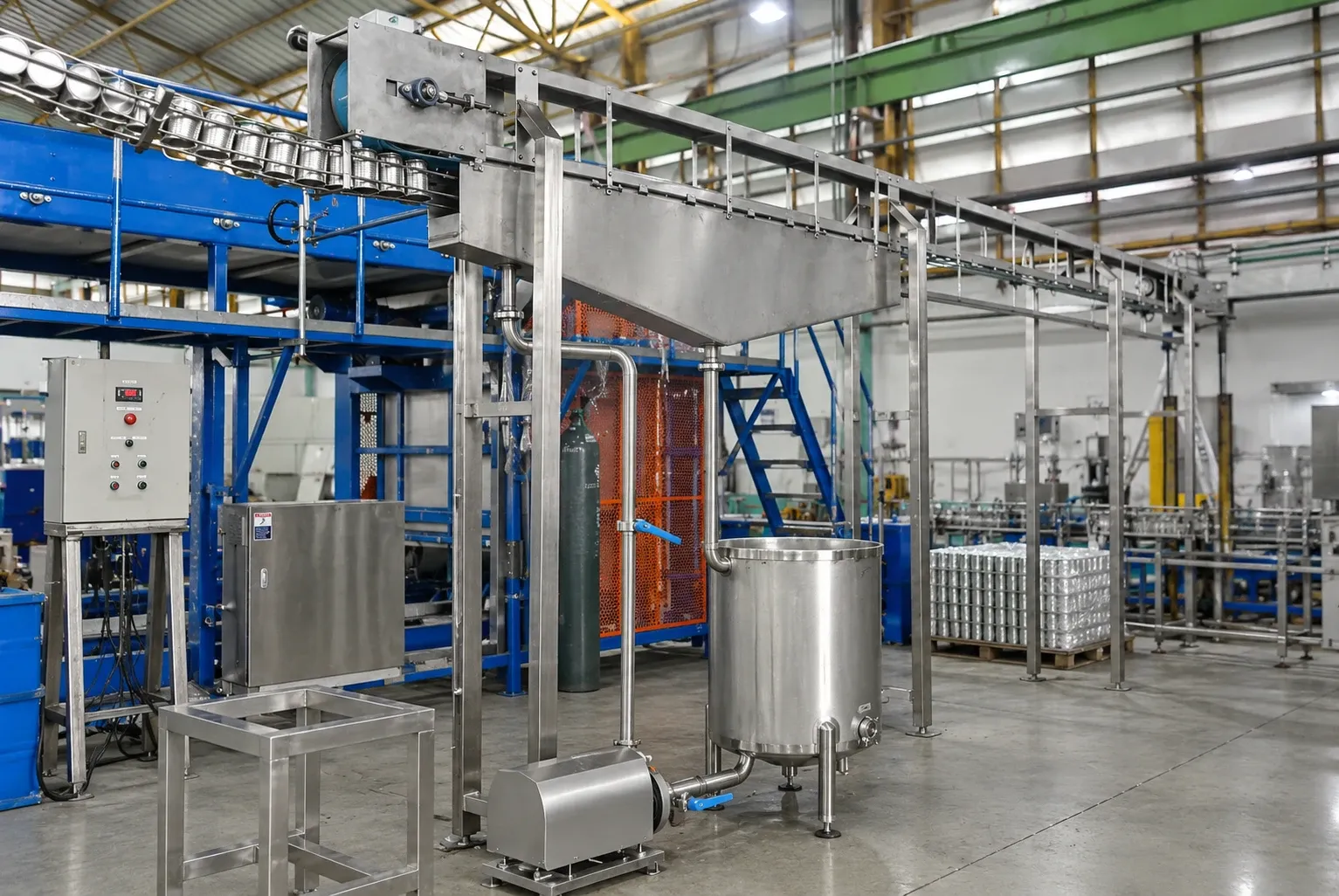
Empty cans are washed and loaded before rotary filling in that reference route. This is separate from raw-material washing. The pineapple reference has its own agreed equipment scope.
Retort Basket Handling
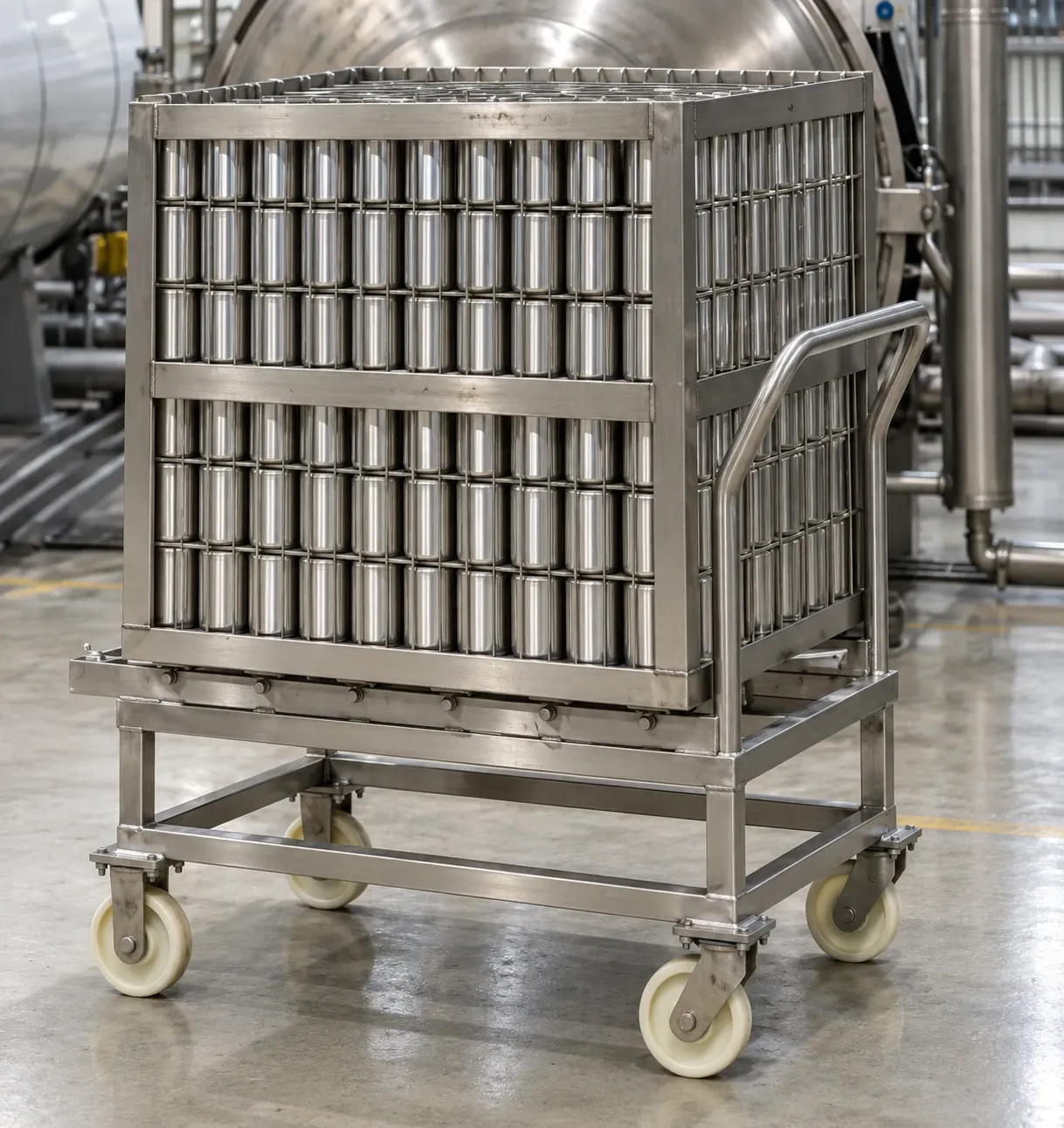
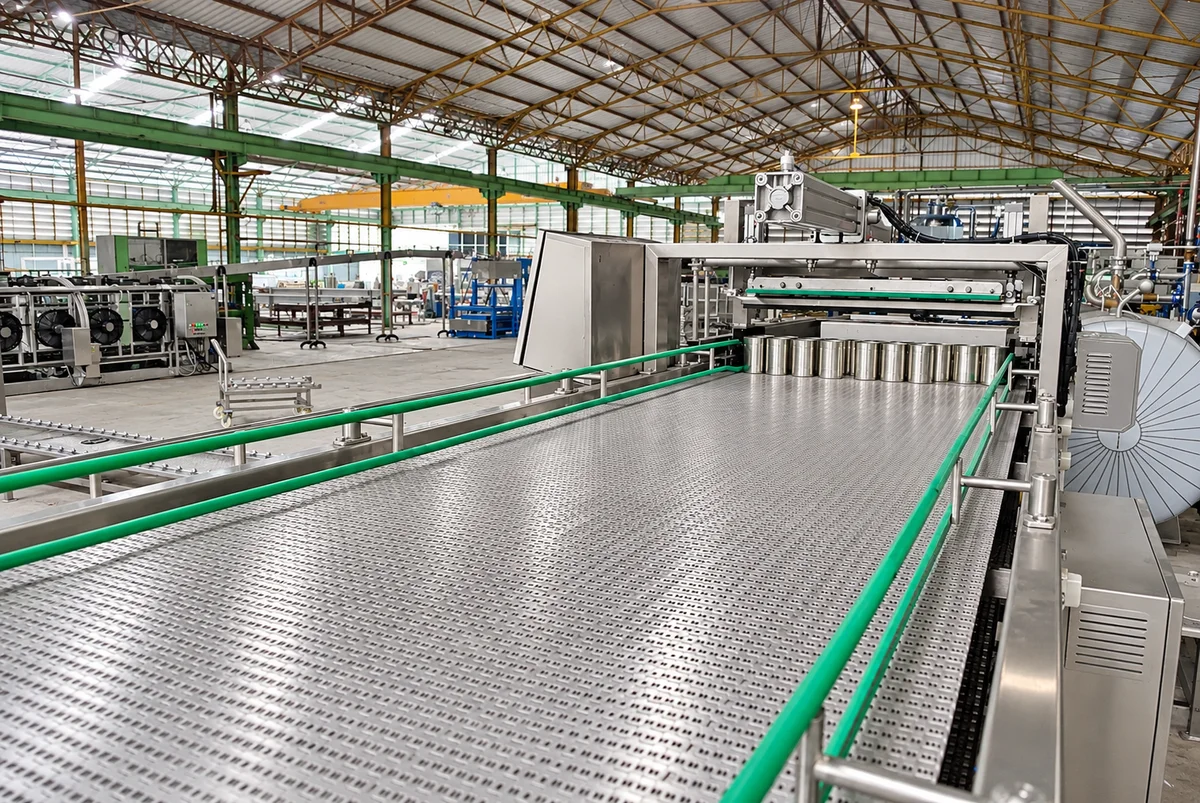
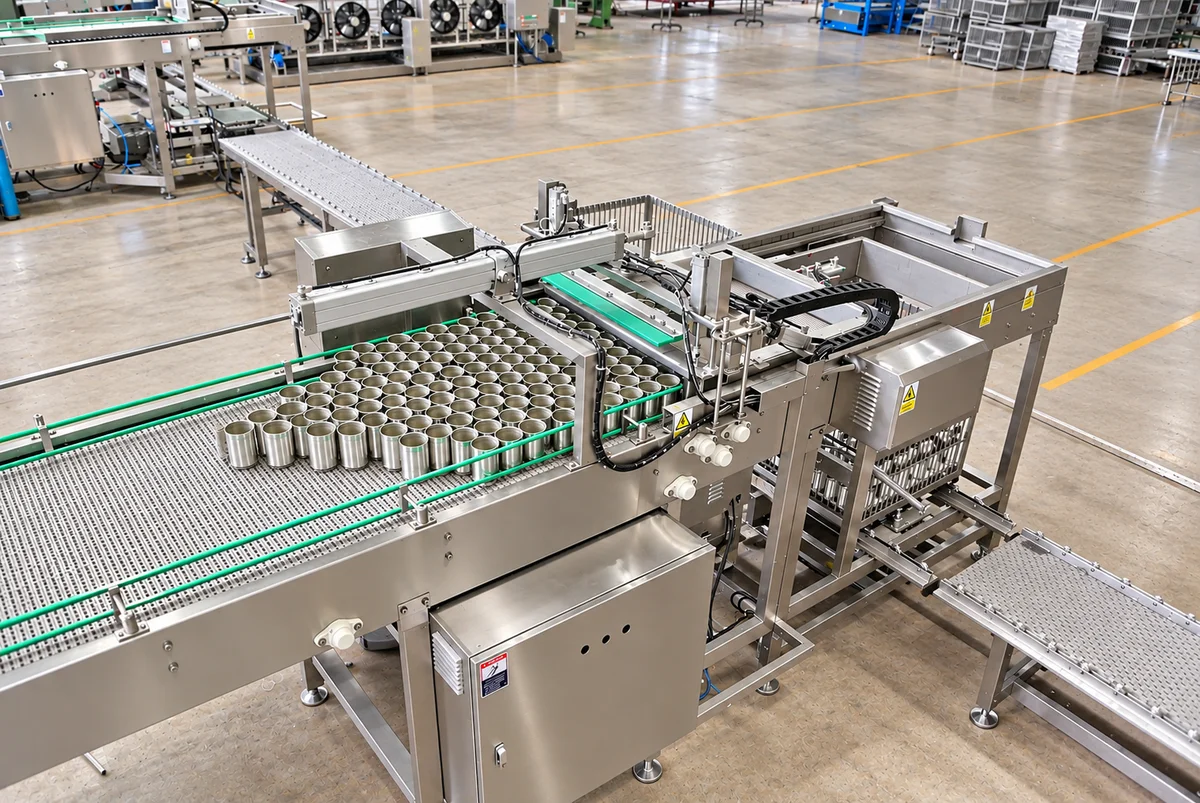
After seaming, conveying and inkjet coding, the coconut reference line automatically loads cans into retort baskets. A rail arrangement transfers the baskets to the Dual System Retort. Automatic unloading follows heating and cooling inside the retort.
Can Tilting
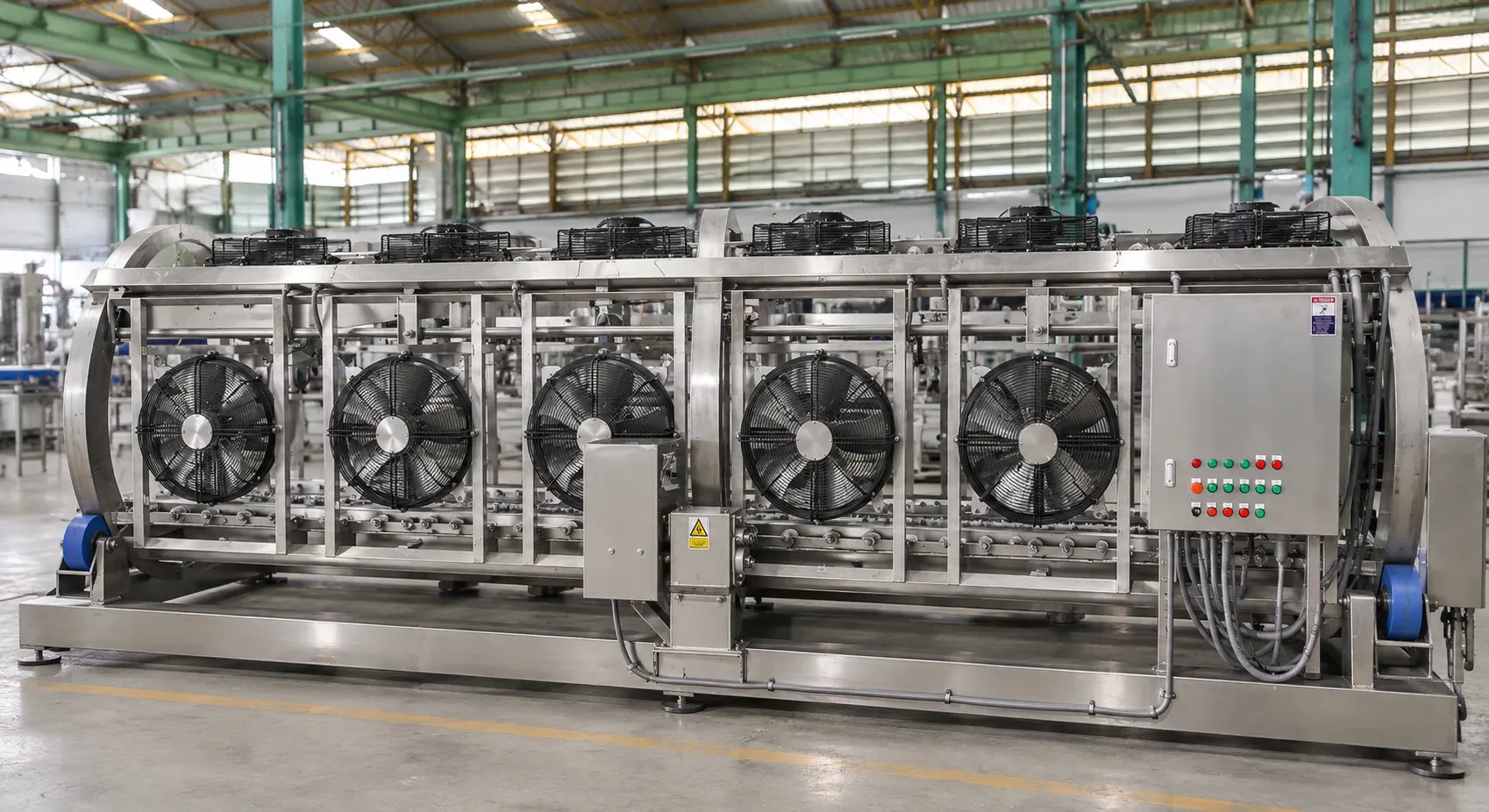
Can tilting is positioned after automatic retort unloading and before exterior drying in the coconut milk and cream route.
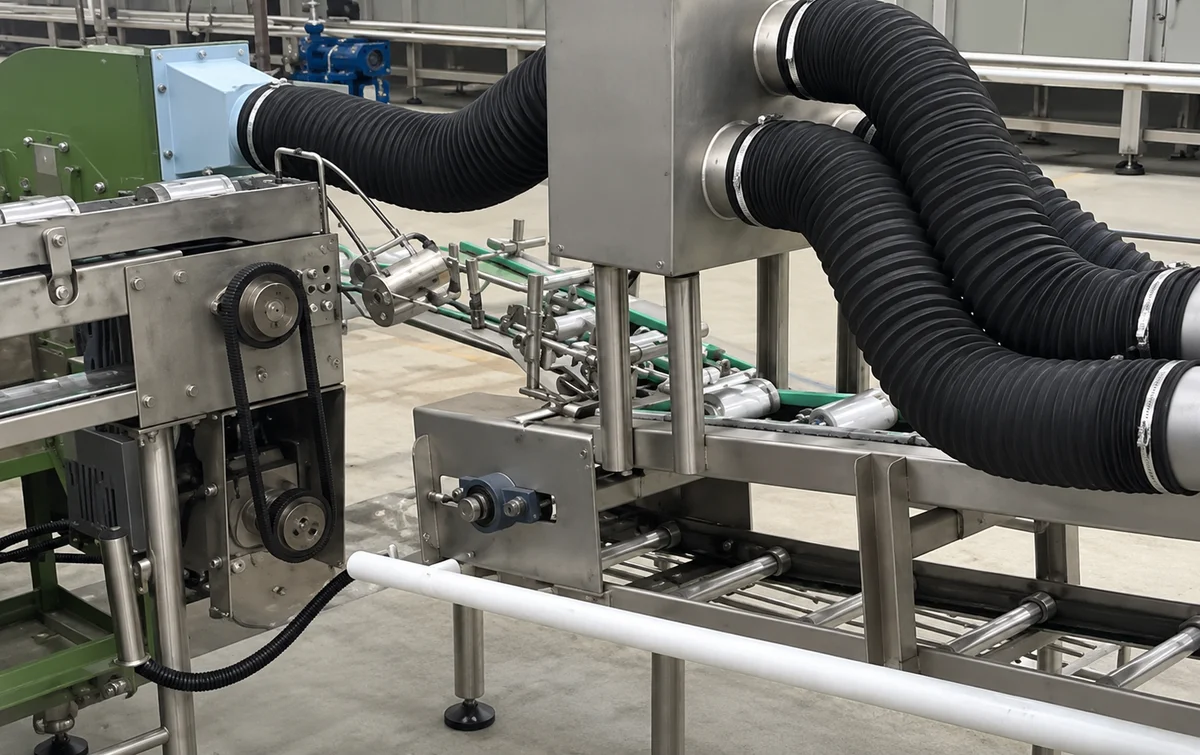
The illustrated integrated unit uses a cylindrical rotating frame to tilt cans and drain water, with fans blowing surface water from the package in the same assembly.
Package Surface Drying
In the pineapple canning line, a continuous air-blowing arrangement removes surface water from cans travelling along a conveyor after cooking and cooling. Exterior drying also follows tilting in the coconut canning route. Drying concerns the outside of the package, not concentration or drying of the food inside.
The coconut can-tilting and surface-drying functions share the integrated assembly shown above.
Palletizing
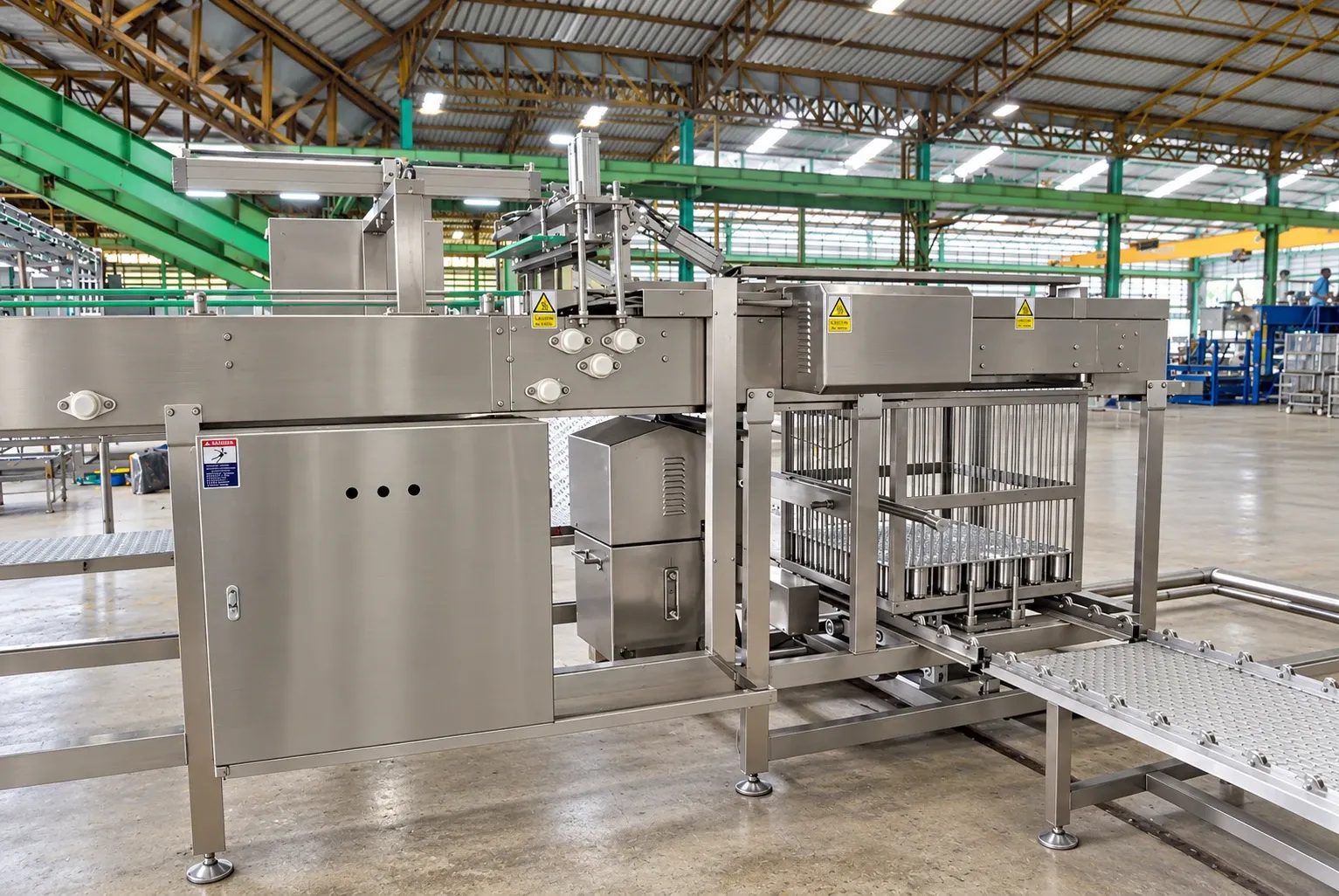
In the coconut reference route, conveying and palletizing follow tilting and exterior drying, bringing the filled packages to the end of the handling sequence.
Inkjet Coding
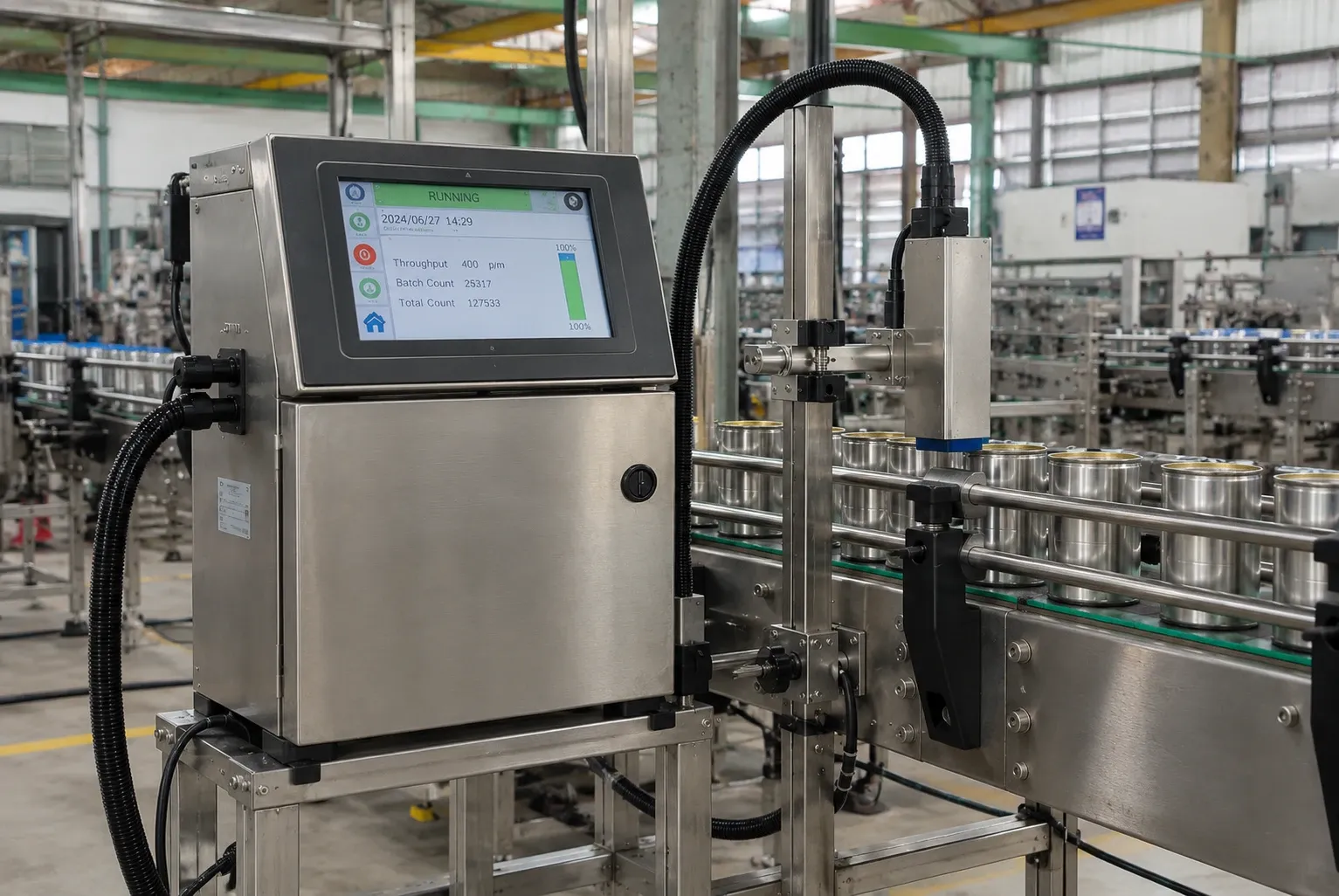
Inkjet coding is located after seaming and conveying and before automatic basket loading and retort processing in the coconut reference route. Its position follows that line arrangement rather than being placed at the end of every process.
Discuss Your Supporting Equipment
Share the can or package size, line rate, handling tasks, layout and connections. Describe the level of automation required and the existing filling, seaming and thermal-processing equipment.