
Type A uses a multi-tube-in-tube arrangement for liquid products. Product characteristics, packaging and storage requirements are considered when discussing the treatment and system configuration.
Heat-treatment selection
UHT & Pasteurization — System Selection
Compare treatment purposes and tubular arrangements, then explore the system appropriate to your product, packaging and storage requirements.
UHT and aseptic processing
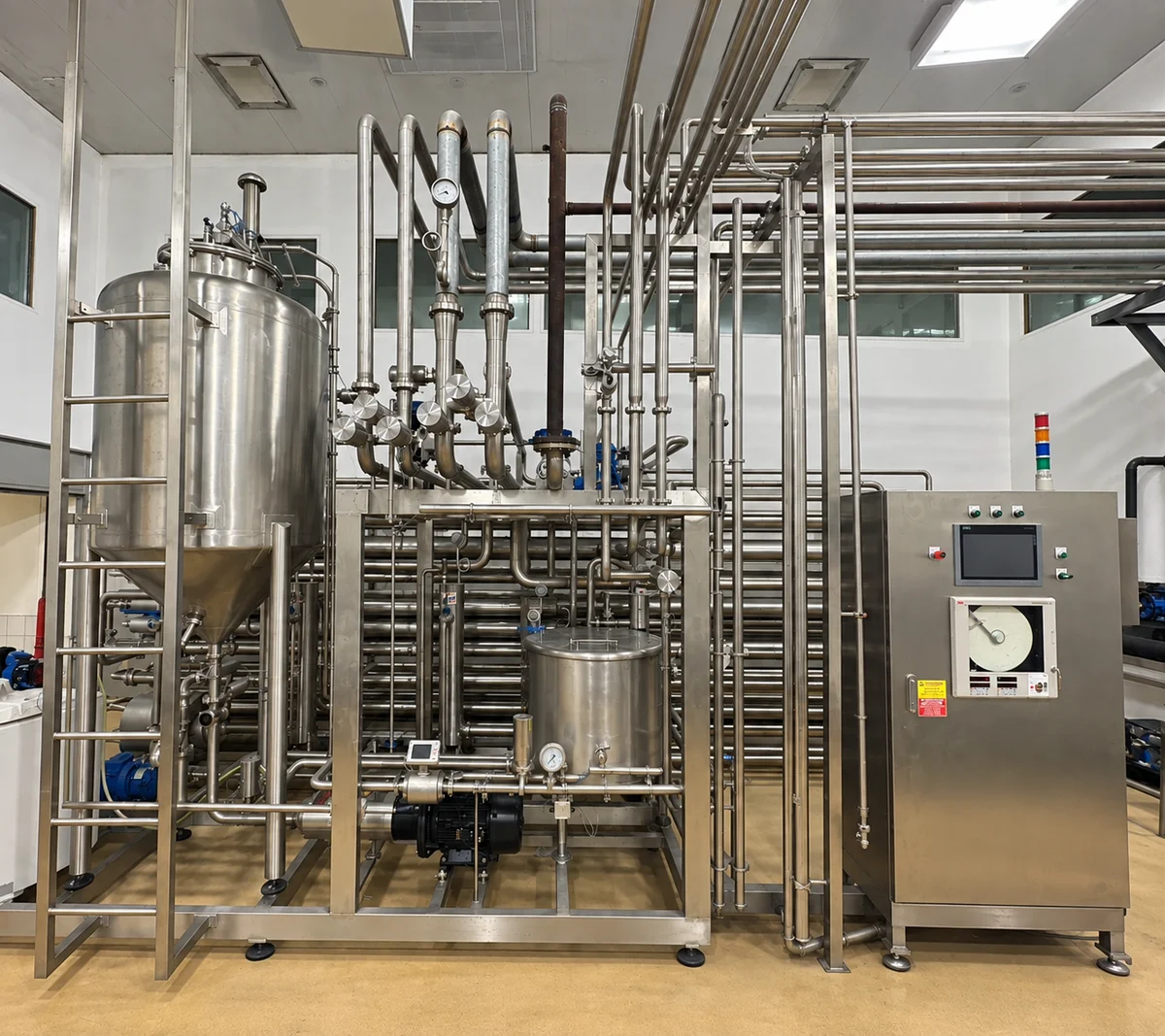
UHT uses very high temperatures for a short, controlled time to achieve commercial sterility under defined processing conditions.
Explore UHT Systems ↗Pasteurization
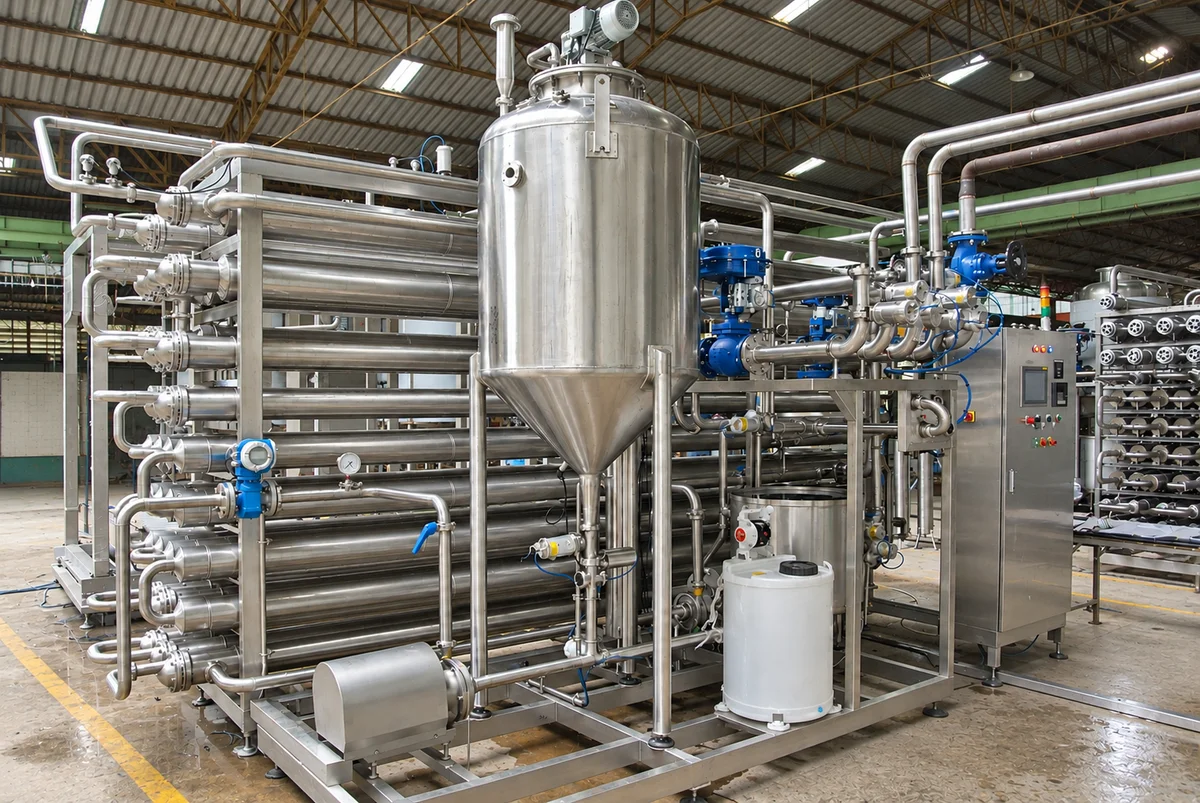
Pasteurization reduces target microorganisms. Treatment, filling method and storage conditions are assessed together.
Explore Pasteurization Systems ↗Tubular arrangements and selection
Type A and Type B describe different tubular arrangements. Product characteristics, packaging and storage requirements guide system selection.
Type A: Liquid products
Type B: Products with particles
Type B uses a tube-in-tube arrangement for products containing particles. Tube forms include plain, corrugated and twisting configurations. The product and project requirements guide the discussion of the appropriate arrangement.
Muninmax’s approach to UHT
Review controlled heat treatment, aseptic cooling and closed transfer to a tank or filler.
Read Muninmax’s approach to UHT details ↗Coconut Water: UHT and Aseptic Filling
Review the Type A coconut-water application and its aseptic line configuration.
Read Coconut Water: UHT and Aseptic Filling details ↗Storage and Transport After Aseptic Processing
Review product, process and packaging validation, unopened packaging and specified storage conditions.
Read Storage and Transport After Aseptic Processing details ↗Designed and built by Muninmax
Manufacturing, sourced components and partner responsibilities are defined for each project.
Read Designed and built by Muninmax details ↗Project scope and performance guarantees
Performance guarantees are agreed in writing for each project. They specify the guaranteed values, raw material and operating conditions, test methods and acceptance criteria.
Read Project scope and performance guarantees details ↗Manufacturing and system configuration
The heating arrangement is selected around the product, packaging and storage requirements. Tubular systems, direct steam-injection UHT and plate pasteurization address distinct equipment configurations.
Read Manufacturing and system configuration details ↗Direct Steam-Injection UHT
Review direct heating by steam injection with indirect regeneration and its project conditions.
Read Direct Steam-Injection UHT details ↗Direct steam-injection reference configuration
Read the configuration table and utility requirements for this UHT arrangement.
Read Direct steam-injection reference configuration details ↗Plate Pasteurizer
Review cooling, regeneration, heating, holding and flow-diversion provisions.
Read Plate Pasteurizer details ↗Plate-pasteurizer reference configuration
Read the plate-pasteurizer table, material designations and duty-specific utilities.
Read Plate-pasteurizer reference configuration details ↗Discuss the Treatment Requirement
Bring product, particle, flow, packaging and storage information where known.
Discuss treatment requirements ↓Discuss your UHT or pasteurizer project
Contact Us
Address: 107/1 Moo 5, Wang Phong, Pran Buri, Prachuap Khiri Khan 77120, Thailand.
Prepare the Product and Process Information
Tell us about the product and the heat-treatment requirements. Where known, share:
- The product and whether it contains particles.
- The intended filling method, packaging and storage conditions.
- The processing steps before and after heat treatment.
- The existing equipment and connections needed within the project scope.
Share the required flow rate where known.
You can begin without choosing a tubular type or preparing a complete specification.
Planning a UHT or Pasteurization Project