
Equipment · Muninmax
UHT Systems
Controlled heat treatment followed by cooling and transfer under aseptic conditions.
System selection depends on the product, packaging and storage requirements.
Discuss your UHT requirements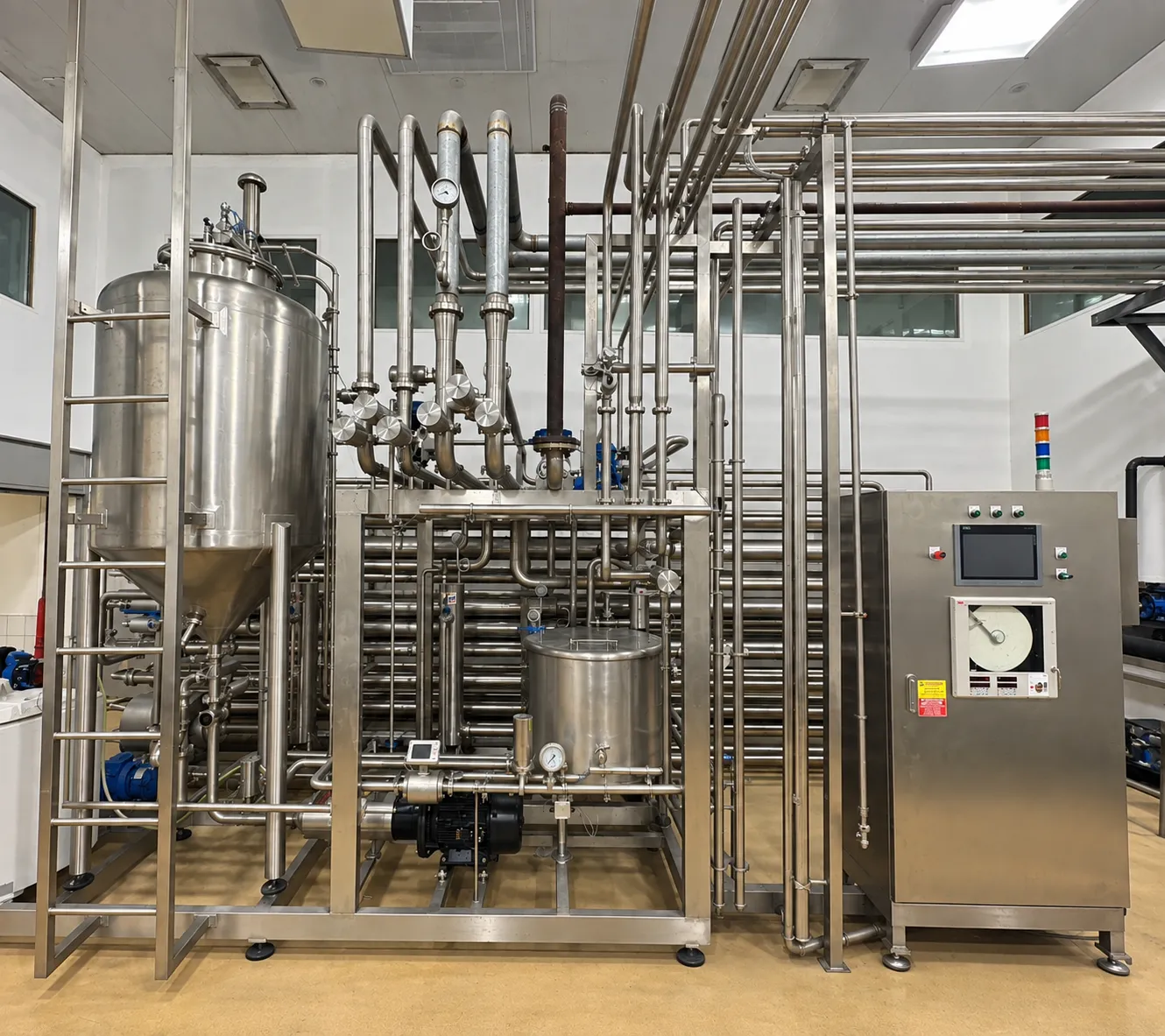
UHT and aseptic processing
UHT, or ultra-high-temperature treatment, uses very high temperatures for a short, controlled time to achieve commercial sterility under defined processing conditions. The required treatment depends on the product.
Pressure is controlled to prevent boiling in the heating and holding sections. After heat treatment, the product must be protected from recontamination through aseptic cooling, transfer and filling.
Muninmax’s approach to UHT
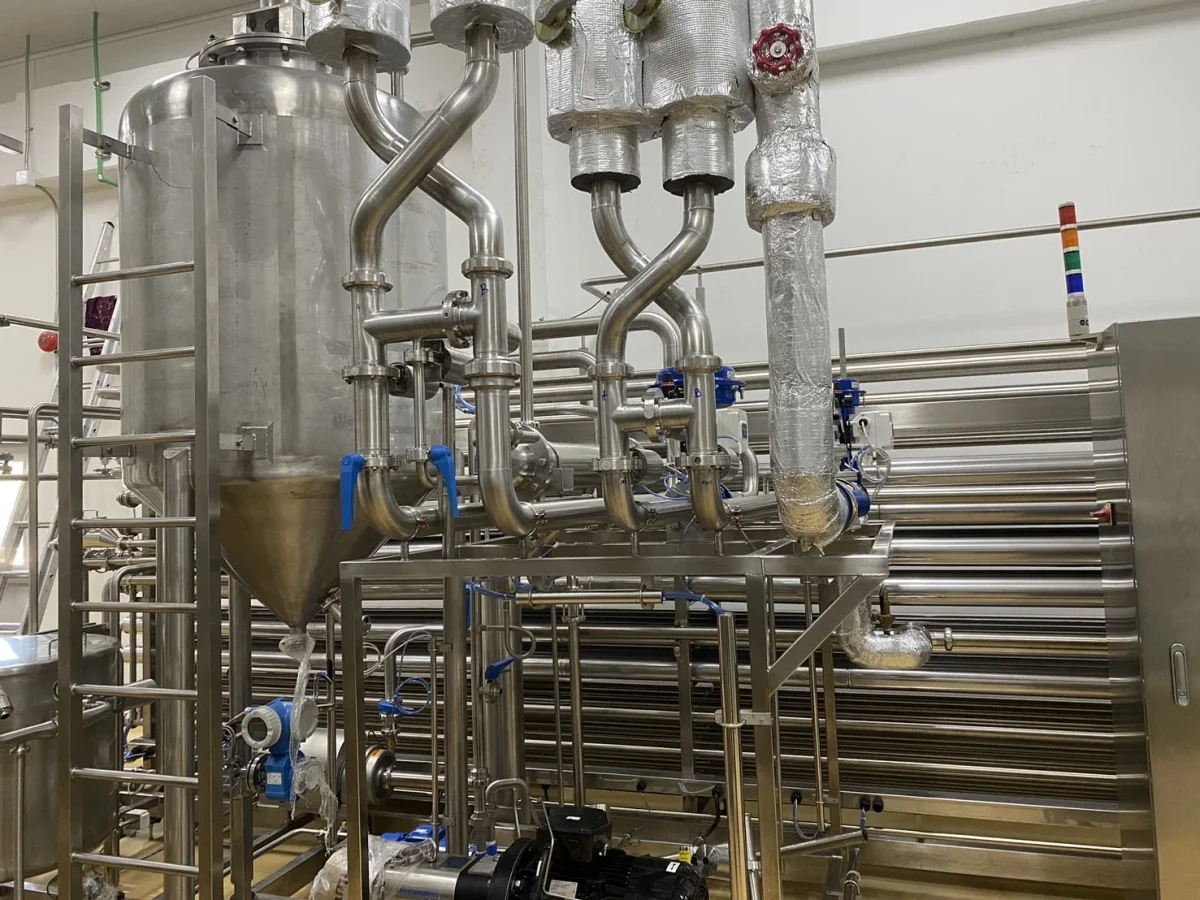
Muninmax has particular expertise in aseptic systems. We design UHT systems for controlled heat treatment, followed by cooling and transfer under aseptic conditions.
Our UHT systems can connect to an aseptic tank or directly to an aseptic filler, depending on the product’s characteristics and project requirements.
- Controlled heat treatment
- Aseptic cooling
- Closed transfer
- Aseptic tank or filler
Tank or filler connection depends on the product and project requirements.
Coconut Water: UHT and Aseptic Filling
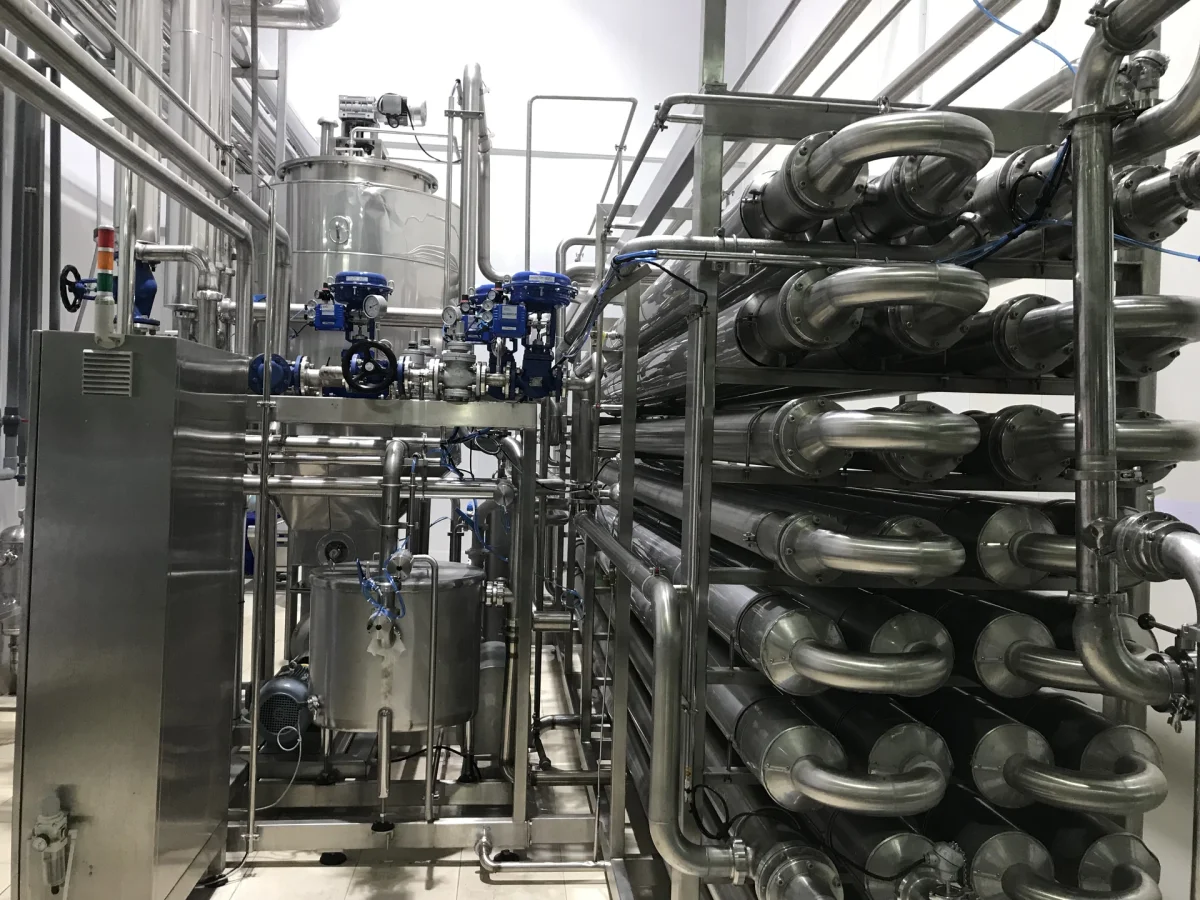
Coconut water after the separation of solids and oil is a liquid product that can be processed with Muninmax's Type A UHT arrangement. After heating and cooling, the product passes through a closed system that maintains aseptic conditions to an Aseptic Bulk Filler, either directly or through an aseptic tank, depending on the line configuration.
Storage and Transport After Aseptic Processing
When the suitability of the product, process and packaging has been validated, the aseptic system enables storage and transport without refrigeration before the packaging is opened, under the specified storage conditions. This can reduce refrigeration-related storage and transport costs.
Direct Steam-Injection UHT
This configuration combines direct heating by steam injection with indirect heat regeneration. The system arrangement includes a balance tank, a product timing pump with variable-frequency control and process-flow measurement.
Reference Configuration
| Item | Configuration |
|---|---|
| Heating principle | Direct steam injection with indirect regeneration |
| Direct heating module | Steam injector, expansion vessel, condenser and vacuum pump |
| Heat-exchange arrangement | Tubular heat exchanger and plate heat exchanger for pre-cooling and regeneration |
| Machine controls | Allen Bradley or equivalent PLC with HMI |
| Temperature recording | Chart or digital recorder included |
| Homogenizer inclusion | Determined by product type and the scope ordered for the project |
Steam, chilled water, cooling water, process water, compressed air and electricity are specified for the duty. The direct-heating configuration is described separately from the Type A and Type B tubular arrangements.
Tubular arrangements and selection
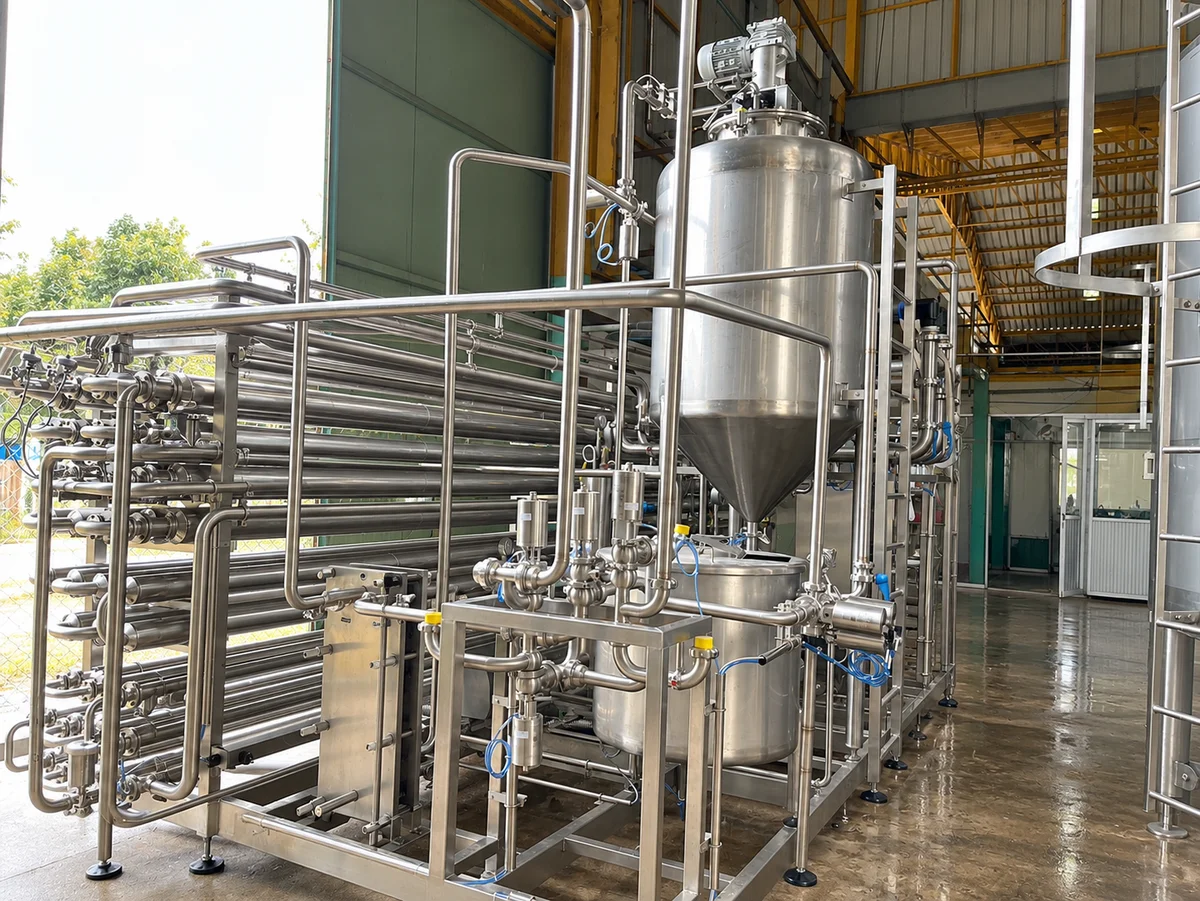
Type A uses a multi-tube-in-tube arrangement for liquid products. Type B uses a tube-in-tube arrangement for products containing particles. Product, packaging and storage requirements guide selection.
Tubular arrangements and selection
Manufacturing and project scope
We design, fabricate and assemble UHT and pasteurizer systems in-house. Our fabrication work uses stainless steel sheet and tubing, and we also specify and source associated equipment and components.
Work carried out by Muninmax and work involving other manufacturers or partners are identified for each project.
Muninmax’s general scope covers production line design, machine manufacturing, installation, commissioning and after-sales service.
For UHT and pasteurizer projects, included work, optional items and exclusions are defined in the project proposal and agreement. The responsibilities of Muninmax, the customer and any partners are specified for each project.
Performance guarantees are agreed in writing for each project. They specify the guaranteed values, raw material and operating conditions, test methods and acceptance criteria.
Prepare the product and process information
Provide the product composition, presence and size of particles, required flow rate, packaging format and intended storage conditions. This information defines the treatment duty and equipment arrangement.
Share the processing steps before and after heat treatment, along with existing equipment and connections needed within the project scope.
You can begin without choosing a tubular type or preparing a complete specification.